


Product Description
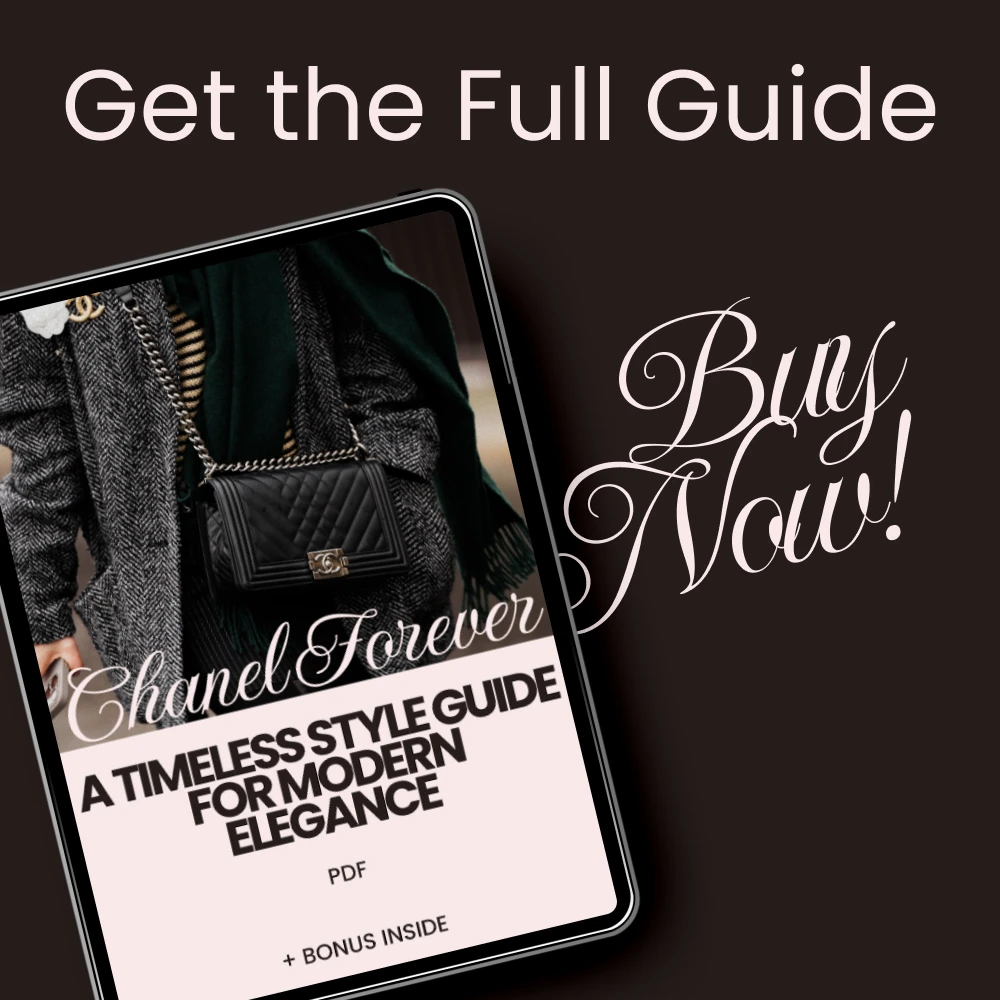
Step into the world of effortless elegance with Chanel Forever: A Timeless Style Guide for Modern Elegance, the ultimate digital resource for those who want to embody the classic and chic essence of Chanel. This comprehensive guide walks you through the iconic pieces, timeless styling tips, and the mindset that has made Chanel synonymous with sophistication. Whether you’re looking to refine your wardrobe or simply elevate your personal style, this guide is your key to unlocking the secrets of modern elegance.
Inside this guide, you will discover:
- The Origins of Chanel’s Vision: Understand the foundation of the Chanel timeless style guide and why it continues to inspire.
- Signature Wardrobe Staples: Learn about the Little Black Dress, the iconic tweed jackets, and accessories that define the brand.
- AI-Powered Styling: How technology can help you curate timeless outfits effortlessly.
- Celebrity Case Studies: Explore how modern celebrities style their Chanel looks and learn from their fashion choices.
- Practical Tips: Avoid common mistakes when styling Chanel pieces and get styling prompts using AI tools.
- Budget-Friendly Chanel: Curate your dream wardrobe without breaking the bank, with guidance on where to find affordable Chanel-inspired pieces.
Chanel Forever isn’t just a fashion guide—it’s a mindset. It’s perfect for fashion enthusiasts, style-conscious individuals, and anyone who admires the enduring allure of Chanel timeless style. Whether you’re new to the brand or already an avid fan, this guide offers something for everyone. It’s designed for people who want to bring the sophistication of Chanel into their everyday wardrobe and lifestyle. What sets this guide apart is its modern approach, integrating both timeless style and the power of AI tools to elevate your look.
Don’t miss out on the chance to transform your style into one that’s truly timeless. Download Chanel Forever: A Timeless Style Guide for Modern Elegance now and begin your journey towards a wardrobe that reflects grace, class, and modern elegance.
Order cancellation
All orders can be cancelled until they are shipped. If your order has been paid and you need to make a change or cancel an order, you must contact us within 12 hours. Once the packaging and shipping process has started, it can no longer be cancelled.
Refunds
Your satisfaction is our #1 priority. Therefore, you can request a refund or reshipment for ordered products if:
- If you did not receive the product within the guaranteed time( 45 days not including 2-5 day processing) you can request a refund or a reshipment.
- If you received the wrong item you can request a refund or a reshipment.
- If you do not want the product you’ve received you may request a refund but you must return the item at your expense and the item must be unused.
We do not issue the refund if:
- Your order did not arrive due to factors within your control (i.e. providing the wrong shipping address)
- Your order did not arrive due to exceptional circumstances outside the control of legendarypicksmarket.shop (i.e. not cleared by customs, delayed by a natural disaster).
- Other exceptional circumstances outside the control of https://legendarypicksmarket.shop
*You can submit refund requests within 15 days after the guaranteed period for delivery (45 days) has expired. You can do it by sending a message on Contact Us page
If you are approved for a refund, then your refund will be processed, and a credit will automatically be applied to your credit card or original method of payment, within 14 days.
Exchanges
If for any reason you would like to exchange your product, perhaps for a different size in clothing. You must contact us first and we will guide you through the steps.
Please do not send your purchase back to us unless we authorise you to do so.
Instant download
Your purchase will be available to download once payment is confirmed.
Instant download items don’t accept returns, exchanges or cancellations. Please contact us if you have any problems








The five core elements of timeless style clicked for me immediately.
The balance between heritage and adaptability landed exactly right The camellia flower and double C logo being framed as cultural carriers rather than just logos genuinely shifted how I see the brand. A small but meaningful reframe.
I spent years buying clothes I thought were stylish and then wondering why nothing felt cohesive. My wardrobe was a graveyard of impulse decisions—a bold printed blouse here, a trendy silhouette there, nothing that held together beyond its initial excitement. I picked this guide up while researching capsule wardrobes, and the section on neutral color palette was the first thing that genuinely stopped me. Black, white, beige, navy—so obvious in retrospect, but I'd never consciously applied it. The idea that pieces should mix, match, and transition from day to night seamlessly isn't just advice; it's a philosophy that rewired how I shop. I cleared out anything that only worked with one other item. Then came quality over quantity. I owned fourteen black dresses. Not one of them was actually well made. I kept two, donated the rest, and used the mental space to identify what was missing. The advice on prioritizing durable fabrics like tweed, silk, and wool has since saved me from three impulse buys that would have unraveled within a season. The effortless chic principle—appearing stylish without appearing to try too hard—has been my north star ever since. This guide genuinely restructured how I approach getting dressed, and that's not something I expected from a style PDF.
Tweed jacket with slim trousers finally went from concept to weekly outfit.
LBD advice—pearls for daytime, flats to swap in—is the kind of tip you read and wish you'd internalized years ago. The day-to-night versatility framing is practical without being condescending, which is rare in fashion writing.
❤️️✨
Breaking down common styling mistakes—over-accessorizing, ignoring color balance—was the most useful stretch of the guide. The mirror test question was a genuinely clever shortcut. I would have liked more depth on building around a single hero piece rather than just naming the errors.
The quilted flap bag with chain strap as wardrobe anchor — nothing in my styling approach makes more sense now.
Before this guide, I treated tweed jackets as special-occasion pieces that lived in my wardrobe untouched for months. The styling guidance changed that entirely—the suggestion to pair them with slim trousers for modern elegance and reserve patterned tweeds as statement pieces is so obvious in hindsight, but it was information I'd never encountered so clearly stated. I've since worn mine four times this month. The AI prompts section was also more useful than I expected—having a concrete example like asking an AI to curate ten essential pieces for city life made the concept feel actionable rather than abstract. It reframed AI tools as collaborators rather than shortcuts. The writing throughout is consistent and grounded; this doesn't read like a trend report but like advice that will still apply in five years.
Second-hand treasure hunting felt like the most democratizing piece of advice here—vintage pieces carrying history and authenticity is a framing I hadn't encountered before. The budget wardrobe section deserved more space given how useful the case study was. A slightly missed opportunity, but strong throughout.
Finally understood why brooches belong in the accessories conversation.
Confidence is your best accessory—four words that made the lifestyle chapter click.
AI styling prompts were surprisingly concrete—most guides gesture at technology without telling you what to actually ask ✨ Having worked examples made it feel immediately usable rather than aspirational. The capsule wardrobe prompt alone changed how I think about wardrobe planning.
Solid foundational advice, though some AI applications feel further away than the guide implies.
The Margot Robbie example—LBD anchored by statement pearls—illustrated how a single iconic piece functions as a focal point better than any abstract rule could. Seeing the principle demonstrated through a concrete look made it stick. This guide writes about Chanel as a practice, not a product, which is exactly the right angle.
What separates this from other style guides is that it treats Coco Chanel's original philosophy—comfort, simplicity, elegance—as a living framework rather than a historical footnote. The idea that fashion should free the wearer, not confine them, is threaded through every section in a way that feels intentional. The attention to detail principle, specifically the note about polished shoes and delicate jewelry elevating an overall look, is something I'd dismissed as fussy before reading it in context. The virtual closet audit concept from the AI portion also reframed the tool as a gap-spotter rather than just a stylist, which is a genuinely useful mental model. For anyone building or rebuilding a wardrobe, this is a grounded and honestly useful starting point.
The effortless chic principle—looking polished without looking like you tried —finally has a name.
Beautifully concise—just wished the high-low mixing guidance had one concrete product example.
Neutral color palette reasoning—black, white, beige, navy—is presented as a system rather than a constraint, which is the smarter framing. Choosing pieces that can move from day to night without effort isn't luck; it's architecture. This guide lays that out clearly and without jargon.
I came to this guide at a moment of genuine wardrobe crisis—I'd just moved cities, donated half my clothes in a panic, and was starting over with almost nothing. The pressure to rebuild quickly was pushing me toward exactly the kind of trendy, replaceable pieces this guide warns against. Reading the section on quality over quantity at that moment felt like having someone grab my arm before I walked into a fast-fashion store. I bought one tweed jacket instead of six blouses. I wore it nine times in the first month. The mix and match framework—pairing it with a pencil skirt for classic appeal or slim trousers for a modern edge—gave a single piece three entirely different lives The budget section was where the guide really surprised me. I hadn't thought seriously about secondhand shopping, but the framing around authenticity and history made it feel like a discovery rather than a compromise. I found a vintage quilted bag at a consignment store two weeks later. The point about AI as a guide, not a rulebook, is something I keep returning to—once I read that line, the instinct to just accept every app suggestion disappeared. This guide didn't just help me rebuild a wardrobe, it reframed what I was trying to build in the first place.
The mirror test question—elegant or overly busy—is now a genuine pre-exit ritual.
Thoughtfully written but assumes more wardrobe budget than many readers have, despite the budget tips.
Kristen Stewart's tweed-and-leather pairing lands better as a real example than most abstract styling rules could. The guide consistently grounds its advice in actual looks rather than editorial ideals, which keeps it from feeling inaccessible. That consistency throughout is what makes the advice feel trustworthy.
I've read at least a dozen style guides over the years and most do one thing well—either history, practical advice, or trend analysis. This one attempts all three and largely succeeds. The origin content on Coco Chanel born in 1883 and her rejection of ornate design is brief but properly contextualized, not just decorative backstory. The common styling mistakes chapter is where the guide earns its keep—neglecting fit as a separate error from poor styling choices is a distinction most guides collapse into one point, and separating them here made both feel more actionable. The trend-versus-timeless concept from the AI section is also worth highlighting: the idea of staying on top of trends while keeping your core wardrobe insulated from them is a genuinely smart approach to fashion sustainability.
❤️
Practical and well-paced—I only wished the mindset content went deeper on sustaining elegance long-term.
The conclusion's restatement of Coco's philosophy—fashion fades, but style lasts—earns its place at the end because the guide builds toward it rather than just repeating it. By the final page it feels true rather than familiar. That's harder to pull off than it sounds.
Two-tone pumps framed as a deliberate finishing touch, not an afterthought—a shoes take finally worth keeping.
There's genuine value in the core elements and the celebrity examples, but the AI applications feel more like a wish list than current reality. The guide reads as if these tools are readily available when most are still quite limited in practice. The foundational styling content is strong enough to stand on its own without the tech framing.
Wardrobe-on-a-budget content is where this guide stands apart from Chanel-adjacent writing that typically ignores the price reality entirely The case study of combining a vintage quilted bag with a simple dress and modern flats was the moment the guide stopped being theoretical and became genuinely useful. The point about prioritizing longevity—materials and fit over trends—reads less like advice and more like a policy once you commit to it. I've applied it to every purchase I've considered in the past two months. The style simulations concept—experimenting with outfits virtually before committing to purchases—also reframed how I approach buying decisions. Naming it explicitly gave it weight as a practice rather than an afterthought.
⭐
The content on personalized AI recommendations and trend-versus-timeless alerts is forward-thinking and well-articulated. The guide occasionally conflates aspirational AI capabilities with currently available tools, which creates a gap between what's promised and what's accessible. The core styling advice, though, is rock solid.