


Is Chanel Truly Timeless… or Just Brilliant Marketing?
Few fashion houses spark as much admiration and debate as Chanel. From glossy magazine covers to carefully curated Instagram feeds, the brand represents elegance, power, and exclusivity. But behind the quilting, tweed, and double C logo lies a bigger question many shoppers quietly ask: chanel overrated or not?
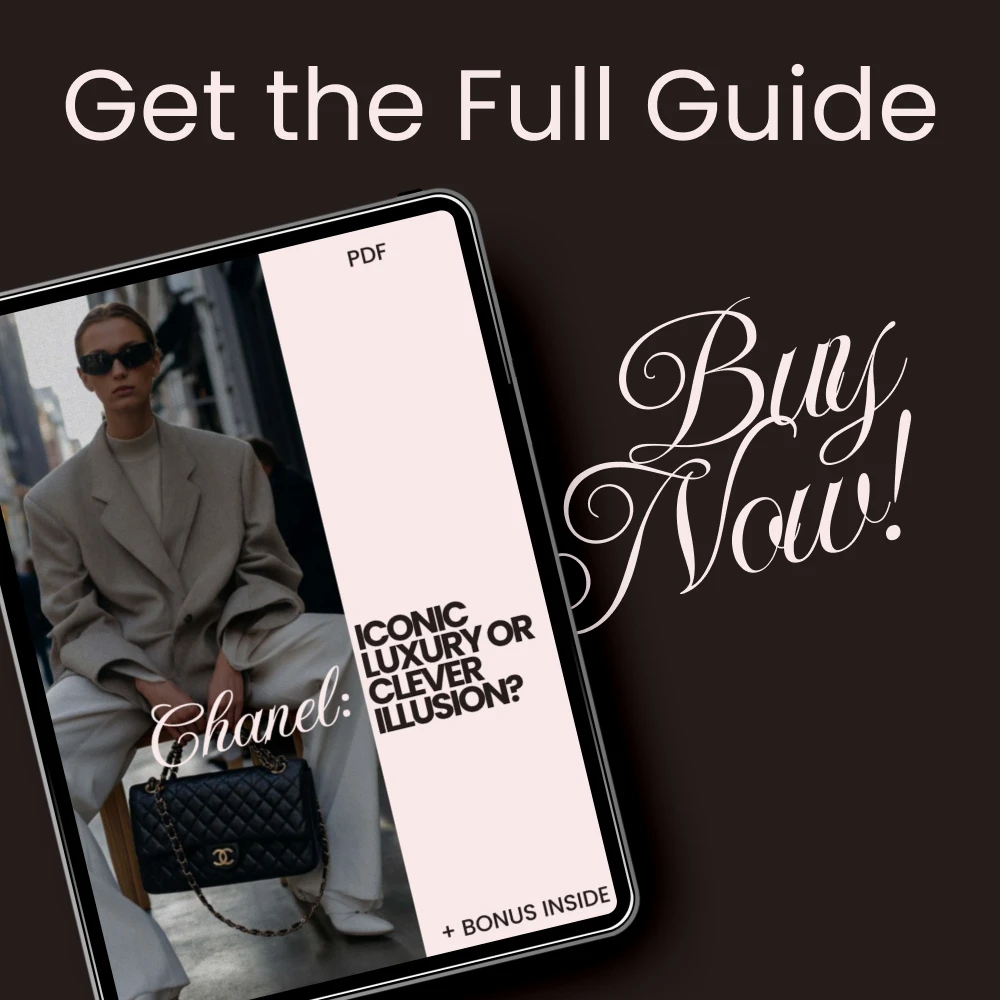
Chanel: Iconic Luxury or Clever Illusion is a thought-provoking, research-backed digital guide designed to help you look beyond the logo and make confident, informed luxury decisions. Whether you’re considering your first Chanel purchase or questioning a recent one, this guide gives you clarity without bias.
What’s Inside This Guide
- Chapter 1: The Chanel Myth — How a Brand Becomes Legendary
- Chapter 2: What You’re Really Paying For
- Chapter 3: When Chanel Feels Overrated (and Why)
- Chapter 4: Smarter Ways to Evaluate Luxury Today
Why This Guide Is Different
Unlike typical fashion blogs or brand-biased reviews, this guide breaks down luxury using logic, psychology, and modern tools. It doesn’t tell you what to think — it teaches you how to think when evaluating high-end purchases. You’ll explore the emotional power of branding, understand the mechanics of price increases, and learn how to analyze value objectively.
This is not a Chanel hate piece. It’s a balanced deep dive created for thoughtful consumers who want clarity on whether Chanel is a lifelong investment or simply a masterclass in perception.
Who This Is For
- Luxury lovers considering a major Chanel purchase
- Fashion enthusiasts debating chanel overrated or not
- Smart shoppers who want data before spending thousands
- Minimalists reassessing brand-driven buying habits
- Content creators or students researching luxury marketing
Practical Benefits You’ll Gain
- Greater confidence before making expensive fashion investments
- A clear framework for evaluating any luxury brand
- Insight into marketing psychology used by iconic labels
- Tools to avoid common high-end purchasing mistakes
- Clarity on whether to buy, skip, or find better alternatives
Download Now & Decide for Yourself
Luxury should feel empowering — not confusing. If you’ve ever wondered whether Chanel lives up to its legendary status or if it’s time to rethink the hype, this guide is your shortcut to clarity.
Download Chanel: Iconic Luxury or Clever Illusion today and finally answer the question: chanel overrated or not?
Order cancellation
All orders can be cancelled until they are shipped. If your order has been paid and you need to make a change or cancel an order, you must contact us within 12 hours. Once the packaging and shipping process has started, it can no longer be cancelled.
Refunds
Your satisfaction is our #1 priority. Therefore, you can request a refund or reshipment for ordered products if:
- If you did not receive the product within the guaranteed time( 45 days not including 2-5 day processing) you can request a refund or a reshipment.
- If you received the wrong item you can request a refund or a reshipment.
- If you do not want the product you’ve received you may request a refund but you must return the item at your expense and the item must be unused.
We do not issue the refund if:
- Your order did not arrive due to factors within your control (i.e. providing the wrong shipping address)
- Your order did not arrive due to exceptional circumstances outside the control of legendarypicksmarket.shop (i.e. not cleared by customs, delayed by a natural disaster).
- Other exceptional circumstances outside the control of https://legendarypicksmarket.shop
*You can submit refund requests within 15 days after the guaranteed period for delivery (45 days) has expired. You can do it by sending a message on Contact Us page
If you are approved for a refund, then your refund will be processed, and a credit will automatically be applied to your credit card or original method of payment, within 14 days.
Exchanges
If for any reason you would like to exchange your product, perhaps for a different size in clothing. You must contact us first and we will guide you through the steps.
Please do not send your purchase back to us unless we authorise you to do so.
Instant download
Your purchase will be available to download once payment is confirmed.
Instant download items don’t accept returns, exchanges or cancellations. Please contact us if you have any problems








The logo fatigue section put into words something I've been feeling for years but couldn't articulate.
I walked into a Chanel boutique last month fully ready to drop $10K on a Classic Flap. Then I read the section on craftsmanship vs. marketing and realized I couldn't answer a basic question: would I still want this bag without the logo? I sat with that for a week, and it changed everything. I ended up buying a vintage piece from a heritage brand instead — better leather, half the price, and I actually love the design on its own merits. This guide didn't tell me not to buy Chanel; it taught me how to think about why I was buying it.
The social proof breakdown is the sharpest luxury analysis I've read online or in print.
The price inflation timeline was eye-opening. Seeing how Chanel raises prices multiple times a year to climb the luxury ladder reframed everything about how I evaluate these purchases. I'm a lot more skeptical now — in a good way.
Finished it in under an hour and immediately sent it to my group chat.
The way it breaks down scarcity as a deliberate strategy rather than genuine rarity was refreshing. No other guide I've read treats buyers like adults capable of seeing through marketing. The buy/skip/substitute framework at the end ties it all together perfectly.
That question about imagining the item without the logo lives in my head rent-free now
The craftsmanship vs. marketing section needed more specific brand-by-brand comparisons to really land. The framework is smart, but I wanted harder data on materials and construction differences at various price points. The psychological analysis and buying mistakes sections are excellent though.
Loved the honesty about quality inconsistencies in modern Chanel products.
The Classic Flap case study alone justified my time. Understanding that the price has outpaced both inflation and material costs made me rethink a purchase I was about to make. I'm still considering it, but now I'll be buying for the right reasons instead of just chasing prestige.
Clear, direct, no fluff.
The section on how repetition builds perceived value — quilting, chain straps, the double C across decades — was a perspective I hadn't considered. It made me realize I've been trained to associate those visual cues with quality without questioning whether the quality has kept pace with the prices.
❤️✨⭐⭐
This is the anti-hype guide the luxury space desperately needs.
The vintage vs. modern quality gap discussion was something I've experienced firsthand. My mom's Chanel from the 90s feels noticeably heavier and sturdier than the one I bought new two years ago. Reading the section about how mass demand creates pressure even at ultra-high price points connected those dots for me. Now I hunt vintage pieces instead of buying new, and the resale value is better anyway.
The buy/skip/substitute framework at the end is genuinely practical.
I've spent years in luxury retail and this nails the psychology better than most industry textbooks.
The buying mistakes section hit hard — I was absolutely buying for validation and wondering why the thrill faded so fast. Understanding that satisfaction tied to external reactions is inherently fragile was a turning point for how I shop.
Wish it explored Hermès and Dior in the same depth as Chanel, but what's here is solid. The lifestyle fit point about lambskin bags needing careful handling was advice I could have used before ruining mine.
Every luxury shopper should read the scarcity section before their next purchase.
The point about fashion cycles favoring individuality over uniform status symbols explains exactly why my Chanel pieces feel less exciting to me now. Not because the bags changed — because the culture did. That kind of insight is rare in guides like this.
Read it twice and caught new nuances the second time.
The Coco Chanel origin story was more nuanced than the typical brand worship you see everywhere.
I was on the fence about a tweed jacket. The personal style vs. brand identity section helped me realize I loved the silhouette but not the logo — so I found a similar cut from a smaller house for a third of the price. No regrets at all.
Short but dense in the best way possible.
The AI section felt a bit surface-level compared to the strong psychological analysis in the rest. Still, the core argument about separating symbolism from substance is one of the clearest takes I've seen on luxury consumption. Worth the read for that alone.
The luxury ladder concept finally explains why prices keep climbing with no ceiling in sight.
I've been a luxury reseller for four years and the overexposure analysis tracks perfectly with what I see in buyer behavior. When everyone on Instagram carries the same quilted bag, demand for understated brands spikes. This guide captures that shift better than anything I've read from industry analysts.
The diminishing emotional returns point was backed by real psychology, not just opinion.
This made me feel smarter about my spending without making me feel judged for liking luxury
Finally a guide that respects the reader enough to present both sides of the overrated debate.
The storytelling and social proof section connected dots I never thought about. Seeing how celebrity endorsements create a self-reinforcing cycle of perceived value — where things feel important because everyone treats them as important — changed how I evaluate not just Chanel but every luxury brand.
Crisp writing, zero padding.
I bought a lambskin Classic Flap without thinking about lifestyle fit and scratched it within a week. This guide's section on matching the product to your daily reality would've saved me a lot of heartbreak. On the plus side, I now use it as a screening question before every big purchase — does this fit how I actually live?
The observation that Chanel's recognizability is both its greatest asset and its saturation problem was the sharpest take in the whole guide.
The heritage vs. modern production tension is so well explained.
⭐✨
Balanced enough to be trustworthy, opinionated enough to be useful.
My sister and I both read this before a trip to Paris. She ended up buying a Chanel piece with full confidence after applying the personal style test, and I skipped it because I realized I was chasing the brand not the design. We both felt great about our decisions. That's the sign of a guide that works — it doesn't push you one way, it helps you figure out your own answer.
The quality debate section was fair — acknowledged both flawless products and reported inconsistencies without being dramatic.
I wanted more concrete numbers on resale value depreciation for seasonal items versus classics. The framework for thinking about it is strong, but I'm a data person and the analysis stayed a bit conceptual for my taste.
The Coco Chanel section reframing jersey fabric from underwear material to haute couture was fascinating context.
Not just about Chanel — this reframed how I think about every luxury purchase.
The point that luxury is about meaning, not just objects, was the thread running through the whole guide and it works beautifully. I've read plenty of luxury analyses that either worship or trash the brand — this one treats you like someone capable of making your own informed decision.
Love how it positions the overrated question as being about your expectations, not the brand itself.
Bookmarked the substitute section — never considered that approach before.
The idea that ownership should feel like a privilege rather than a transaction is how Chanel justifies every price increase, and this guide lays that mechanism bare without being cynical about it. Really smart framing.
Shared it with my mom who's been a Chanel loyalist for decades — even she said it made fair points
The quilting origin story — inspired by jockey jackets and equestrian gear — was a detail I'd never heard anywhere else.
Best luxury guide I've found that doesn't end with a sales pitch for the brand itself.
Four years ago I would have dismissed this as anti-luxury negativity. After two Chanel purchases where the thrill faded within weeks, every word about buying for validation versus personal style rang painfully true. I've since shifted my whole approach — focusing on whether I'd love the piece without the brand name attached. My wardrobe is smaller now but I actually enjoy everything in it. That mental shift alone was worth the read.
The AI comparison tool suggestion was a nice modern touch on an otherwise timeless topic. Would love to see an expanded version of this covering more brands and product categories in the same depth.
Elegant writing for an elegant subject.
The little black dress origin — reframing mourning attire into modern sophistication — perfectly illustrates how Chanel has always been about reshaping meaning.
No agenda, just clarity.
The controlled availability analysis is the part I keep coming back to. Understanding that Chanel rarely discounts, limits production, and regularly raises prices as a deliberate strategy — not because costs went up — completely changed my relationship with urgency-driven buying. I no longer panic when a sales associate says something is limited.
Made me appreciate Chanel's history more while also questioning its modern pricing — that's a hard balance to strike.
The tweed jacket as borrowed menswear angle added depth I didn't expect.
If you've ever felt guilty for questioning a luxury brand's value, this will validate you.
Concise, respectful, and thought-provoking — everything a luxury analysis should be.